

KS4
GCSE Course Followed: History
Specification: AQA (Syllabus code – 8145)
Why Choose GCSE History?
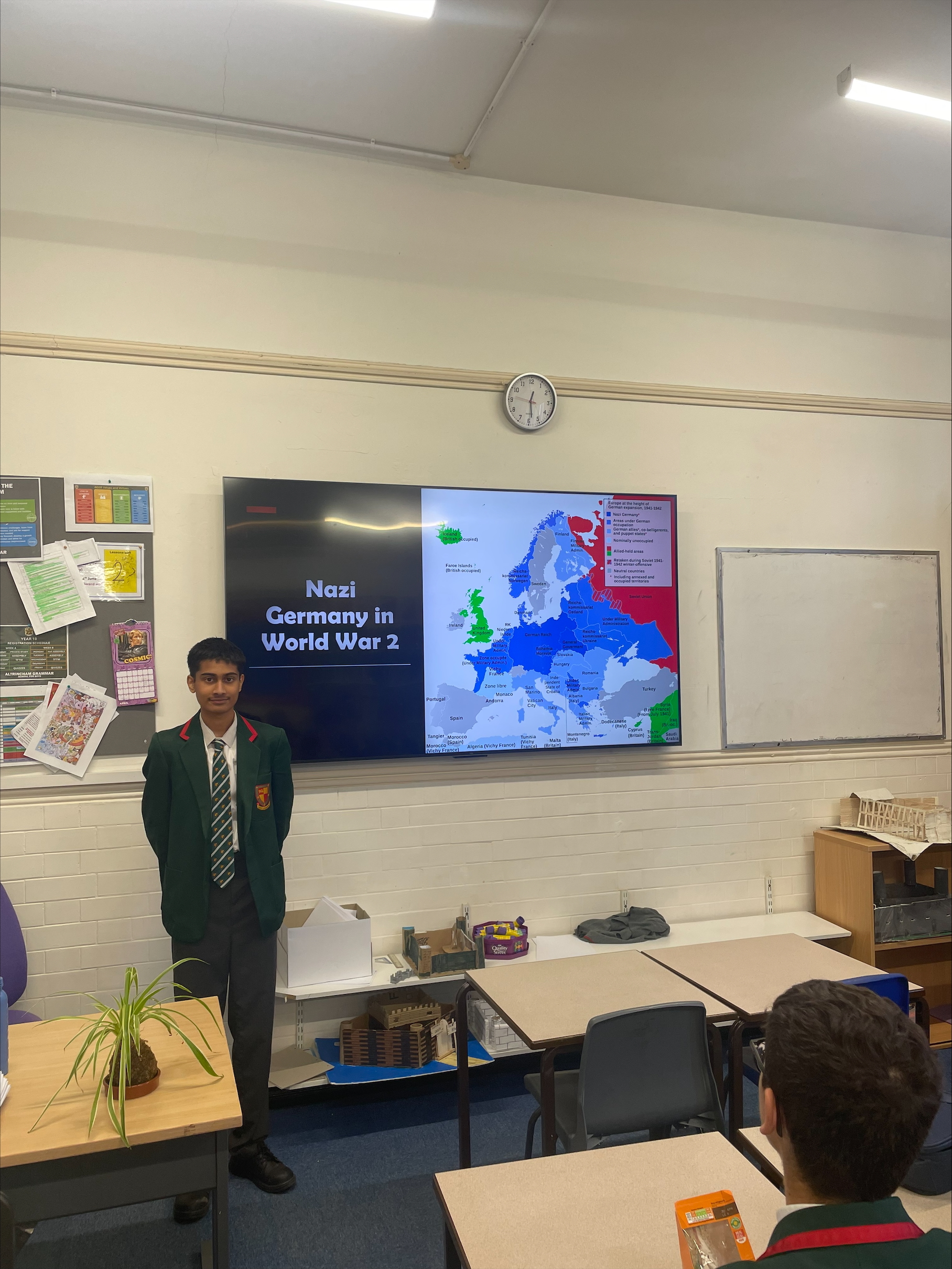
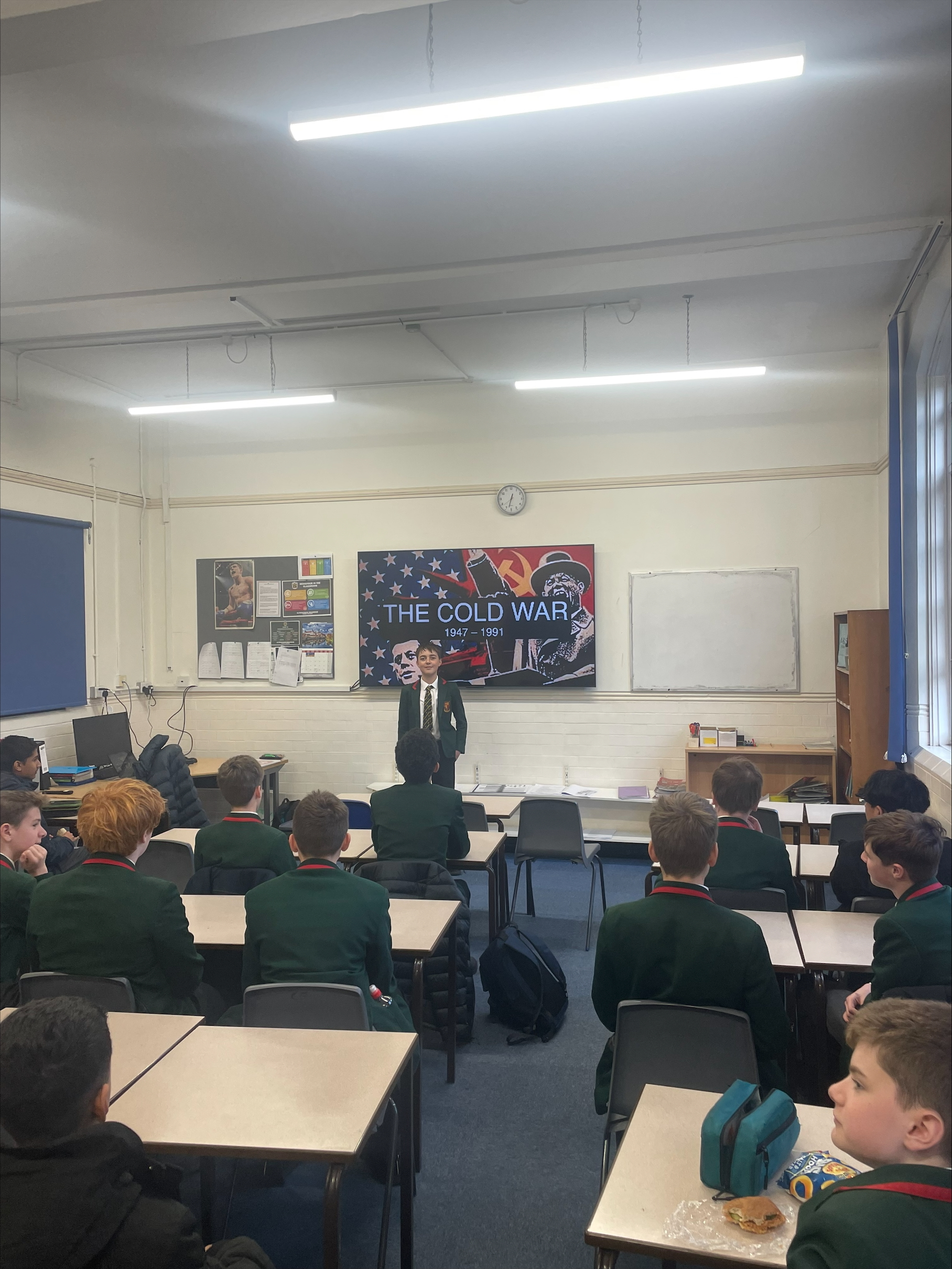
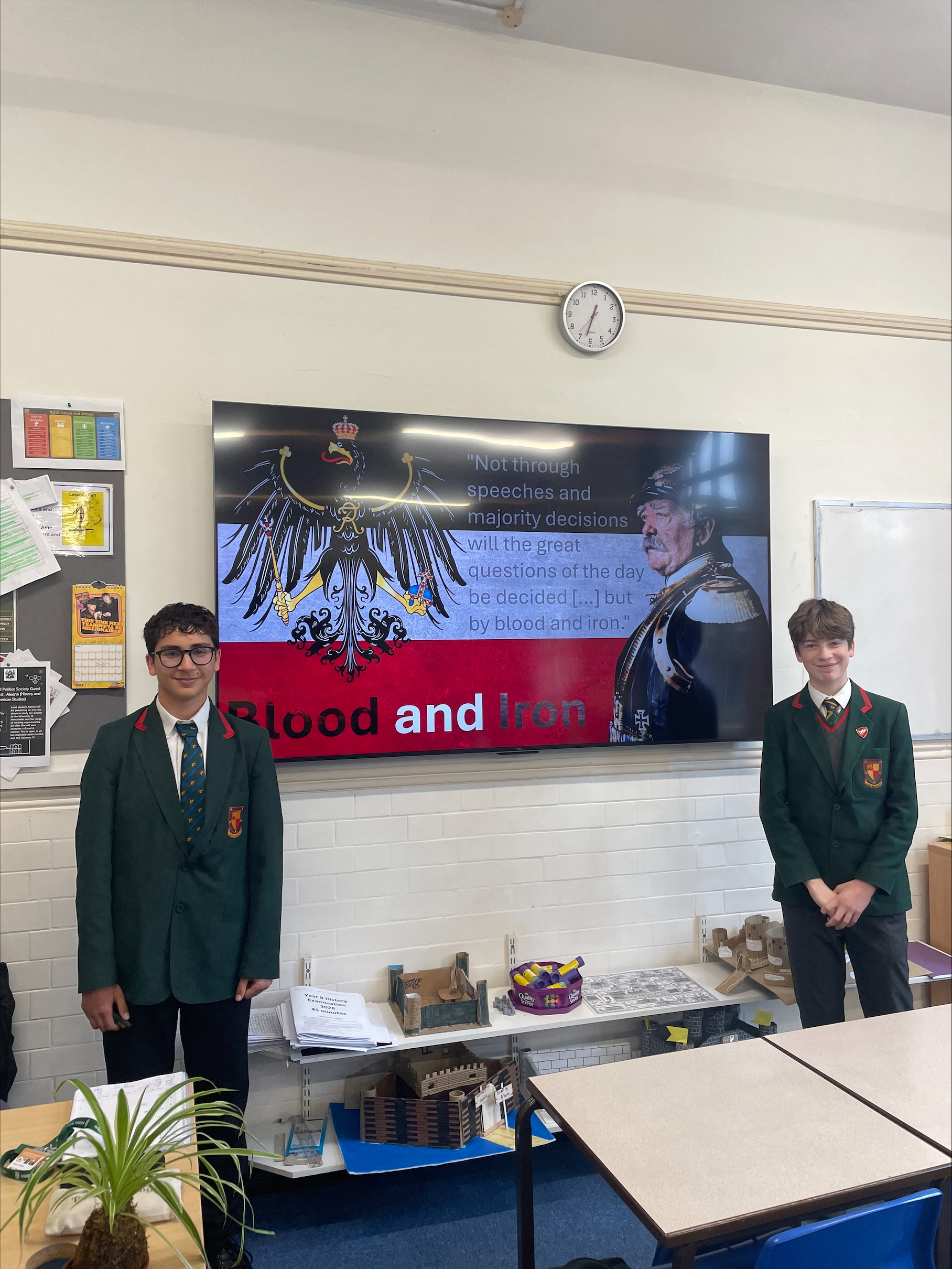
Why should you study History?
History is an opportunity to explore the complex motivations of people throughout the ages. The continuing popularity of the subject can be seen in the fact that History departments at universities are some of the most popular and produce some of the most successful graduates. This is because the transferable skills developed through the study of History in research, analytical thinking and verbal and written communication are so highly valued. History graduates can be found in a wide variety of professions including accountancy, management, education, journalism, the civil service, the business world and the law. History also helps students to develop a sense of identity. It teaches them essential life skills, such as the importance of adopting a questioning attitude towards sources, actively engaging with different perspectives and providing evidence to justify conclusions. It also helps them to understand more fully the complex and rapidly changing world in which they live.
Successful GCSE students need to demonstrate a range of skills:
- They should be able to handle historical sources; understand and extract information from them; compare them; analyse and evaluate them.
- They should have good factual recall and be able to deploy specific knowledge to write and argue clearly.
- They should be able to distinguish between the causes and consequences of historical events, to understand change and continuity over time and to recognise similarities and differences between historical events, movements and characters.
- They should build their confidence to discuss and debate ideas verbally through active participation in lessons.
- They should increasingly seek to take responsibility for their own learning and be willing to research independently beyond what is covered in lessons.
Students in Year 9 have already begun to study the first GCSE History topic on ‘Germany, 1890-1945’ and should therefore, be developing a good understanding of what is involved and a reasonable sense of their own abilities. If they wish to continue with the subject at GCSE level, they should be interested and committed to it. The course as a whole is highly varied, including an engaging combination of British and International History, as well as Medieval, Early Modern and Modern History. It is both challenging and rewarding, whilst also providing an excellent foundation for those students who wish to study History at A Level and beyond.
Course Content
Unit 1: Section A
Germany, 1890 – 1945: Democracy and Dictatorship
- Germany and the growth of democracy
- Germany and the Depression
- The experiences of Germans under the Nazis
Unit 1: Section B
Conflict and tension in Asia, 1950 - 1975
- Conflict in Korea
- Escalation of conflict in Vietnam
- The ending of conflict in Vietnam
Unit 2: Section A
Migration, empires and the people: c790 to the present day
- Conquered and conquerors
- Looking west
- Expansion and empire
- Britain in the 20th century
Unit 2: Section B
Medieval England – the reign of Edward I, 1272 - 1307
- Government, the rights of King and people
- Life in Medieval England
- Edward I’s military campaigns in Wales and Scotland
- The historic environment of Medieval England
Assessment
All units are assessed by examination at the end of Year 11. There are two examinations of 120 minutes which are each worth 50%. There is no coursework or controlled assessment.
We provide a wide range of information, advice and guidance to students online via the school website. Please go to the AGSB Homepage, then select ‘Students’, ‘GCSE Study Skills Pack’ and then ‘GCSE History’ to find out more. The same resources are also available via the Students' Shared Area.
Alternatively, please do not hesitate to contact Mr Croxton, Head of History and Politics, at ncroxton@agsb.co.uk if you have any further questions.
Key Stage Four Curriculum Overview
Year 10
| NAME OF TOPIC | KEY CONTENT OF THE TOPIC | ASSESSMENT POINTS | |
|---|---|---|---|
| HT1 | Asia: Korean War | Causes of the Korean War Development of the Korean War End of the Korean War |
|
| HT2 | Asia: Escalation of the Vietnam War | End of French colonial rule US involvement Johnson’s War |
|
| HT3 | Asia: The End of the Vietnam War | Nixon’s War Opposition to war End of the war |
|
| HT4 | Edward I: Government, the rights of king & people | Henry III’s legacy Development of government, rights and justice |
|
| HT5 | Edward I: Life in Medieval England | Trade, towns and villages Education and Learning The Development of the Legal System |
Trial Exam |
| HT6 | Edward I: Military Campaigns | Medieval warfare, tactics and technology Invasion and colonisation of Wales Relations with Scotland |
Assessment Points are at the teacher’s discretion at GCSE level. Assessments take the form of GCSE-style questions or key-fact knowledge tests.
Year 11
| NAME OF TOPIC | KEY CONTENT OF THE TOPIC | ASSESSMENT POINTS | |
|---|---|---|---|
|
HT1 |
Migration: Conquered and Conquerors |
Invasion |
|
|
HT2 |
Migration: Looking West |
Sugar and the Caribbean |
|
|
HT3 |
Migration: Expansion & Empire and Britain in the 20th century |
Expansion in India |
|
| HT4 | Revision: Germany 1890-1945 | Review of Germany content covered in Year 9 History | |
| HT5 | Revision: Germany 1890-1945 | Review of exam technique for questions on Germany | |
| HT6 | N/A | N/A | GCSE Exams |
Assessment Points are at the teacher’s discretion at GCSE level. Assessments take the form of GCSE-style questions or key-fact knowledge tests.
Recommended Revision Guides for GCSE
Students are issued with excellent resources for each of the four GSCE History topics. These take the form of textbooks for ‘Conflict and Tension in Asia’, ‘The Reign of Edward I’ and ‘Migration, Empire and the People’ and a revision guide for ‘Germany: 1890-1945’. The Asia textbook is swapped for a Revision Guide in Y11.
We make a wide range of bespoke revision materials for all four topics available to students within ‘GCSE History’ in the ‘GCSE Study Skills’ folder, in the Students' Shared Area.
Support available for GCSE Students
Students should always feel able to approach their class teacher in the first instance if they need further support.