

KS4
GCSE Course Followed: Chinese
Specification: AQA (Syllabus code 8673)
Why Choose GCSE Chinese?
There are numerous reasons for choosing GCSE Chinese:
- Stand out from the crowd – while interest in Chinese culture and language is exploding across the world, numbers of UK school students who obtain a GCSE qualification in Chinese remain low.
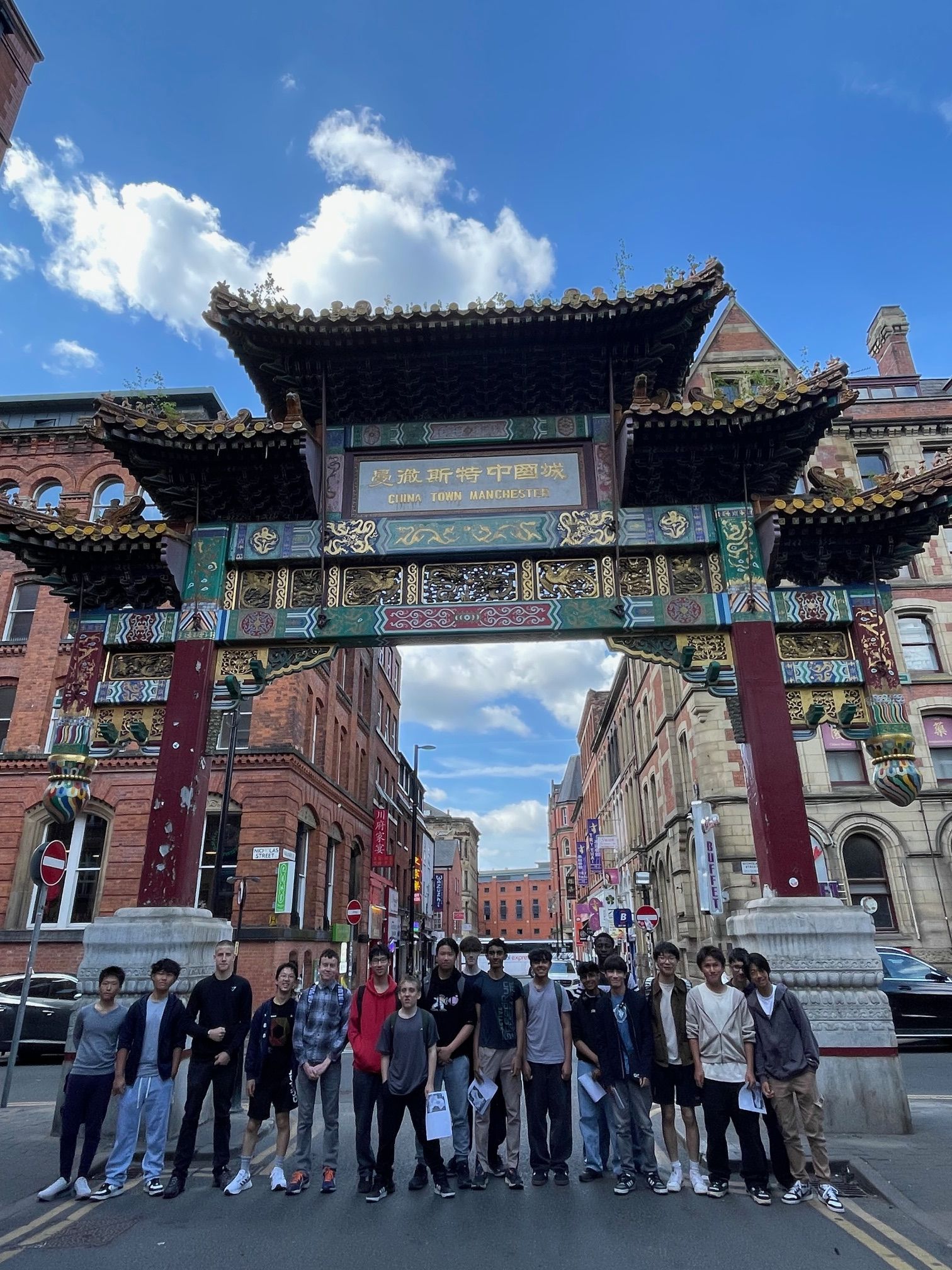
- Learning Chinese to GCSE level will mean you will be able to communicate directly with 1.3 billion people in China as well as the Chinese diaspora across the world, not least in Manchester, which boasts the second-largest Chinatown in Europe.
- Taking GCSE Chinese will also greatly increase your career prospects. There are now direct flights from Manchester to Beijing and Hong Kong while Chinese firms have invested in projects with a development value in excess of £6bn in the region. Business leaders are looking for people who can speak Chinese and who can operate successfully in a Chinese cultural context.
- Ultimately, learning Chinese will give you direct access to one of the world’s oldest and richest cultures, with its rich heritage of novels, short stories, drama, poetry and film.
- Learning Chinese is fun and not as hard as you might think – Chinese characters are not simply random pictures and are now much easier to acquire with the help of digital computer-assisted learning techniques. While tones are important, they are not always critical to understanding and unlike many languages, Chinese has no tenses, no cases, no genders and simple grammar.
What do I need to know?
Having followed the Jinbu textbook series in Years 8 and 9, you already know a lot of the vocabulary and grammar you’ll need for GCSE. You know how to talk about yourself, your family and friends, your hobbies, where you live, school, holidays, food and drink. You will build on these topics over the next two years, as well as move on to new topics such as the media, lifestyle and the world of work. So you are already part way there! Chinese doesn’t get any harder than GCSE- there is just more to learn.
Four skills are tested in a formal exam at the end of Year 11. Each skill is worth 25% of your total GCSE. You will be entered for Higher tier. The exams are set out below:
Listening:
You will answer questions on recorded material from different topic areas. Some material will be formal (for example a telephone message) and some informal (for example a telephone conversation between friends).
Reading:
You will answer questions about short texts on different topics in various forms such as text messages, adverts, emails and letters. You will also translate a short paragraph from Chinese to English.
Speaking:
This exam will be conducted by your teacher. You will have range of activities to complete. You will take part in a role play with your teacher, you will answer questions about a photo and you will have a general conversation on a topic you have previously studied.
Writing:
There are three main tasks to complete. First you will write a short response to bullet points on a certain topic. You will then show off all of your language skills in a more detailed response to bullet points and finally you will translate a short passage from English into Chinese.
What can I do after I have completed the course?
People with language skills and knowledge are highly thought of in the modern world. They stand out as talented and successful people, with broad and exciting horizons. Being able to speak more than one language has been scientifically proven to give people higher cognitive ability. Taking GCSE language(s) means you will have much more fun when travelling. You will add an extra dimension to your personal skills profile which will impress anyone who reads your CV and you will be in a stronger position to get a job in companies with international links or to work abroad. You will also be able to choose between many careers that you may not have previously thought of such as working as a calls interceptor for MI5, being responsible for international links in global companies or even opening new franchises in foreign countries. The options are endless!
Key Stage Four Curriculum Overview
Year 10
| NAME OF TOPIC | KEY CONTENT OF THE TOPIC | ASSESSMENT POINTS | |
|---|---|---|---|
|
HT1 |
My life |
Students will recap the following content: Students will learn the following vocabulary: Students will learn the following grammar points:
Students will learn the following culture: |
Chapter 1 vocab test
Chapter 1 translation test |
|
HT2 |
School |
Students will recap the following content: Students will learn the following vocabulary: Students will learn the following grammar points:
Students will learn the following culture: |
Chapter 2 vocab test
Chapter 2 translation test Chapter 2 speaking tasks (Speaking booklet chapter 2 questions and general conversations set 9 questions) |
|
HT3 |
Leisure |
Students will recap the following content: Students will learn the following vocabulary: Students will learn the following grammar points:
Students will learn the following culture: |
Chapter 3 vocab test
Chapter 3 translation test
Chapter 3 writing task (Writing booklet: chapter 3 writing task) |
|
HT4/ |
Media |
Students will recap the following content: Students will learn the following vocabulary: Students will learn the following grammar points:
Students will learn the following culture: |
Chapter 4 vocab test
Chapter 4 translation test |
|
HT4/ |
Where I live |
Students will recap the following content: Students will learn the following vocabulary: Students will learn the following grammar points: Students will learn the following culture: |
School mock exam |
Year 11
| NAME OF TOPIC | KEY CONTENT OF THE TOPIC | ASSESSMENT POINTS | |
|---|---|---|---|
|
Term 1 |
Holidays, |
Students will recap the following content: Students will learn the following vocabulary: Students will learn the following grammar points:
Students will learn the following culture: |
vocabulary tests
Speaking preparation assessments
Writing and translation preparation assessments School mock exam (including speaking exam) |
|
Term 2 |
Food and drink |
Students will recap the following content: Students will learn the following vocabulary: Students will learn the following grammar points:
Students will learn the following culture: |
Vocabulary tests
Speaking preparation assessments
Writing and translation preparation assessments |
|
HT5 |
The world of work Final revision |
Students will learn the following vocabulary: Students will learn the following grammar points:
Students will learn the following culture: |
Vocabulary tests
Speaking preparation assessments
Writing and translation preparation assessments |
| HT6 | Final revision |
Students prepare for their GCSE Chinese exams in the following ways: Past papers in class |
GCSE Exams |
Recommended Revision Guides for GCSE
Students have a GCSE textbook and a GCSE vocabulary & grammar booklet, which they should be using regularly to learn / revise vocabulary and grammar.
Students have a GCSE speaking booklet, a GCSE writing booklet and a GCSE translation booklet. They should keep all their work in these booklets updated. They should also use these booklets regularly to revise.
Students also have access to various websites to help with their vocabulary, reading, listening and grammar revision. Examples include: www.quizlet.com,
Support available for GCSE Students
A Chinese FLA (volunteer) is available to help students who feel they would benefit from one to one help. For Year 11 students there are extra listening and speaking classes every week to enable the students to practise the skills that they need more help with. Subject teachers also offer one-to-one sessions for students to discuss what they need help with.