
KS3
Art and Design is studied by all pupils in Years 7 to 9. Our curriculum is designed to foster enjoyment and creativity for all students, whether they choose to continue with the subject beyond Key Stage 3. For those who do, it provides a strong foundation for further study.
Our key concepts include:
- The Making of Art: Exploring the formal elements of art, a variety of techniques, materials, and processes, and developing creative responses.
- The Appreciation of Art: Learning about art history, analysing artworks, and building a strong art-related vocabulary.
Key Stage Three Curriculum Overview
All projects will be taught within a given Year group. However, the order to which they are delivered may vary.
Year 7
| PROJECT | NAME OF TOPIC | KEY CONTENT OF THE TOPIC | ASSESSMENT POINTS |
|---|---|---|---|
|
1 |
Introduction/ |
Students join us with a wide range of experiences from Primary school. The first half-term is carefully designed to ensure that all students build a strong and consistent foundation in key artistic skills. During this time, they develop a solid understanding of essential art terminology, such as tone, texture, mark-making, line, form, pattern, colour, and perspective. To support their learning and deepen their understanding of the formal elements, we use examples of both historical and contemporary art. This helps students begin to engage with visual language and understand how it is used to communicate ideas. |
|
|
2 |
Mascot design |
Students will design a fun and original character mascot to promote a new breakfast product (e.g. cereal, smoothie, granola bar). They will explore the relationship between design, advertising, and consumer appeal while developing drawing, annotation, and presentation skills. |
|
|
3 |
Our changing |
This project explores the environmental changes affecting coral reefs. Students will be introduced to the work of contemporary ceramic artist Courtney Mattison, whose intricate sculptures highlight the fragility and transformation of marine ecosystems. Through this project, students will investigate pattern, texture, form, and design in both 2D and 3D formats. They will develop skills in printmaking techniques as well as ceramic work, allowing them to creatively respond to environmental themes while experimenting with a range of materials and processes. |
|
| Exam | Drawing from observation | Drawing is a fundamental skill in Art, and this project focuses on developing students' observational drawing abilities through the study of shoes as subject matter. This task helps students improve their understanding of proportion, line, tone, and detail. However, we recognise that observational drawing is just one aspect of artistic development. When determining a student's final grade for the year, teachers will also consider the range of work produced across all projects, ensuring a more balanced and comprehensive reflection of each student's progress, creativity, and engagement. | FEDS |
Year 8
| PROJECT | NAME OF TOPIC | KEY CONTENT OF THE TOPIC | ASSESSMENT POINTS - FEDS |
|---|---|---|---|
|
1 |
GameScapes: Building Worlds Through Perspective |
In this project, students will develop their understanding of world building in concept art by learning and applying two-point perspective drawing techniques. Through structured lessons, they will gain the technical skills needed to design and illustrate a detailed scene from a fictional video game world inspired by a chosen design brief. The project encourages creativity, visual storytelling, and precision, while introducing students to real-world applications of art in the digital and gaming industries—highlighting concept art as a growing and viable career path. |
Guided Perspective drawing. Design brief research page. Final Perspective Game |
|
2 |
Still life, Vanitas |
In this project, students explore Still Life as a key genre in Western art, with a focus on the symbolism and moral messages found in historical Vanitas paintings. By examining both traditional and contemporary artists, students will develop an understanding of how objects can reflect cultural values, mortality, and materialism. They will create their own modern interpretations of Vanitas compositions using skills in collage, photography, lighting, colour theory, line, and form—encouraging them to communicate meaning through thoughtful visual choices and composition. |
Skull painting Vanitas Photography. Vanitas outcome |
|
3 |
Textile Donut |
This concise project introduces students to the fundamentals of craft, hand sewing, and the construction of a simple 3D textile object. By designing and creating their own felt doughnut, students gain hands-on experience with basic textile techniques while exploring creativity through self-directed design choices. The project encourages imaginative thinking, with inspiration limited only by the students’ own ideas. As part of their contextual understanding, students will also explore the work of contemporary textile artist Lucy Sparrow, whose playful, soft sculptures bring everyday objects to life. |
|
|
Exam |
Painting |
In this project, students will complete a tonal bar and a still-life painting of a fruit or vegetable using only two colours/hues. The aim is to consolidate the painting skills they have developed throughout the year, with a focus on tonal variation, colour mixing, and controlled application of paint. Using a reference image, students are expected to demonstrate their ability to observe and replicate form, light, and shadow while exploring the expressive potential of a limited palette. This task reinforces technical accuracy and creative interpretation through focused, skill-based practice. |
|
YEAR 9
| PROJECT | NAME OF TOPIC | KEY CONTENT OF THE TOPIC | ASSESSMENT POINTS |
|---|---|---|---|
|
1 |
Beyond the Surface: Telling Stories Through Portraits |
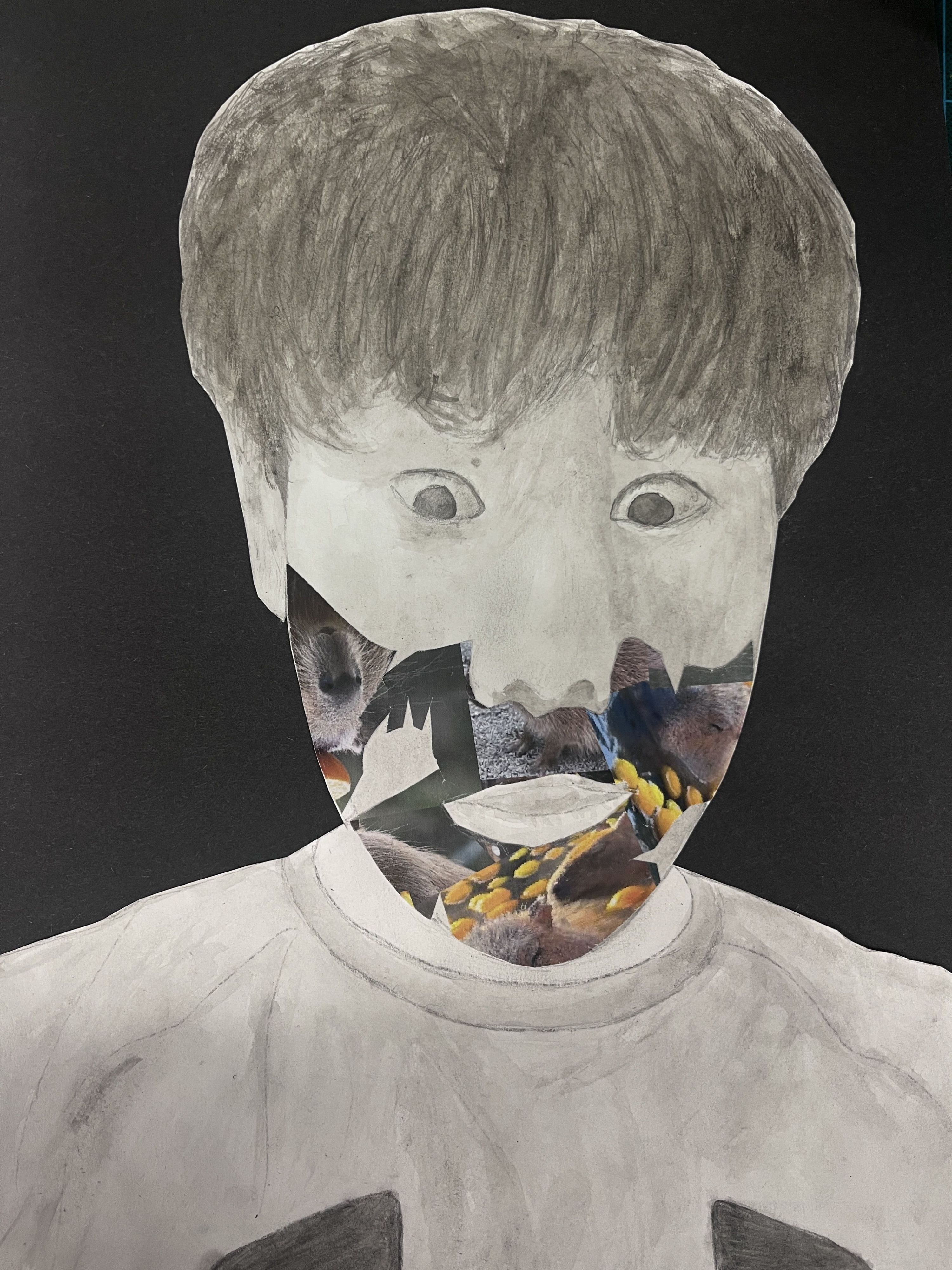
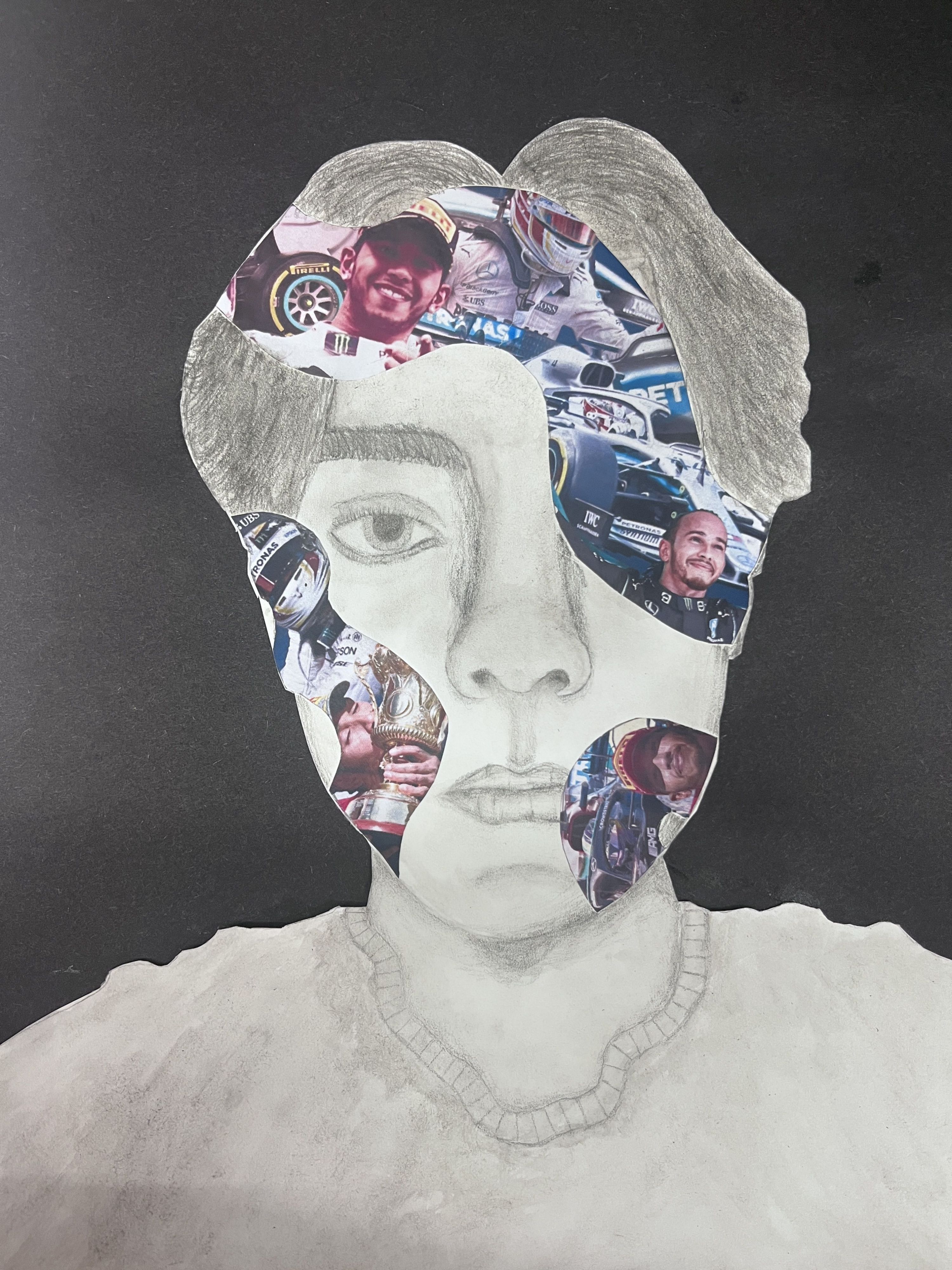
In Beyond the Surface: Telling Stories Through Portraits, students explore how portraiture can go beyond likeness to express identity, emotion, and narrative. Through studying historical and contemporary artists, they will examine how expression, composition, colour, and symbolism can communicate deeper meaning. Students will develop their drawing and painting skills through observational studies and experiments, leading to a final portrait that tells a personal or imagined story. This project encourages both technical growth and creative expression, inviting students to reflect on how we represent ourselves and others through art. |
1-9 Observational drawing Collage techniques Watercolour Skills |
|
2 |
Built by pattern |
Built by Pattern is a creative and exploratory art project that invites students to investigate the rich visual language of cultural patterns from around the world, using these as inspiration to develop their own unique designs. Through this process, students will explore how pattern, form, and structure interact in both natural and built environments, constructing low-relief and 3D forms using card and other accessible materials. They will learn fundamental construction techniques while considering proportion, rhythm, and spatial relationships, and will also experiment with colour and surface texture—incorporating watercolour and mixed materials to enhance visual and tactile qualities. The project encourages students to think across dimensions, connecting 2D design with 3D form, and culminates in the creation of personal, culturally inspired sculptures that reflect a deeper understanding of structure, pattern, and design. |
Pattern design with colour Low Relief Model 3D Slot construction structure Final structure |
What can parents do to support their sons?
Our Art teachers may vary the projects slightly from class to class whilst giving your son a variety of experiences to help him develop his art.
Teachers ask that parents help students to develop the ability to concentrate for an extended period on a drawing etc. and to encourage him to be creative and have the tenacity to modify and refine his work to improve it. If possible, it would be helpful if you could visit a wide range of stimulating places such as art galleries and museums. You Tube and other online providers also have on-line tutorials. This can be an excellent for students to develop technically proficiency at their own pace. We encourage students to show us work produced in their own time so we can offer support and encouragement in their chosen area of art.
Please note: Students occasionally need an apron or overall, of some sort to wear during their Art lessons, usually a technology apron is fine to use.